
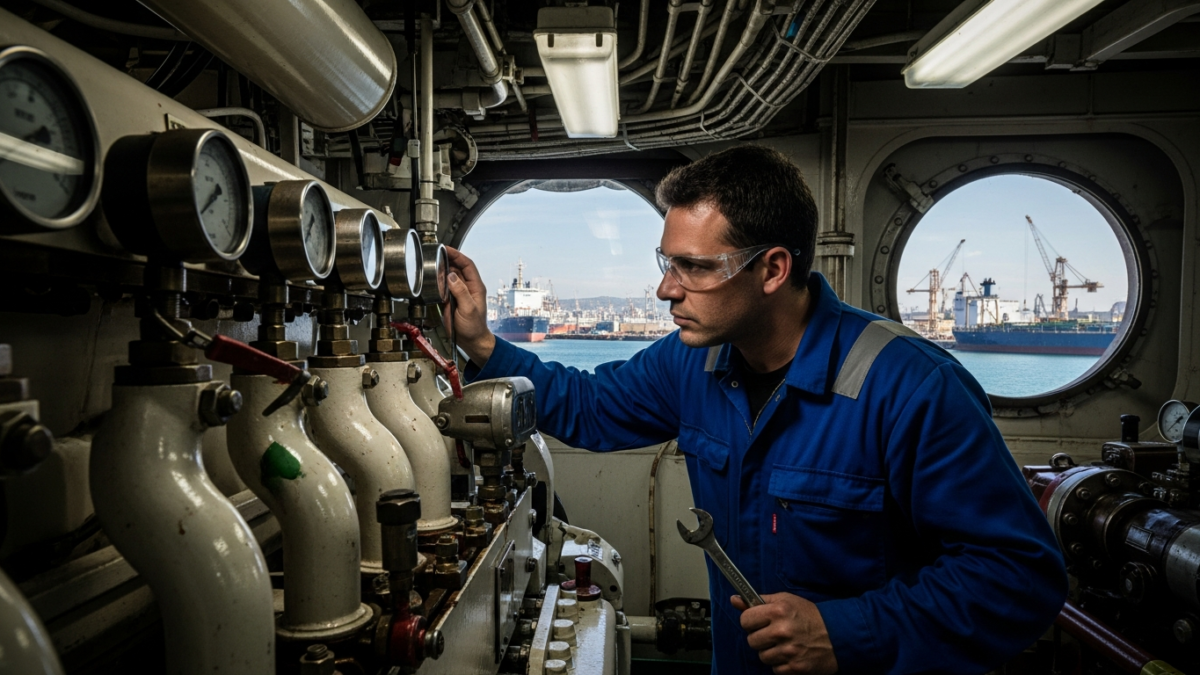
Cyprus remains one of the world’s biggest shipping centres, with the Cyprus flag ranked third globally by deadweight tonnage and roughly 40% of vessels managed from Limassol. That scale matters if you are weighing a marine engineering career in 2026. It supports a clear pay ladder, from junior engine officers at sea — including graduates entering via Cyprus internship programmes — to superintendent and technical management jobs ashore, with Limassol firmly at the centre of the market.
Key Takeaways
- Class IV engineers earn €2,800–€4,200 monthly
- Chief Engineers can reach €14,000 per month
- ITF-CBA vessels may pay 15–30% more
- Superintendent is the main shore-side step
- Limassol drives most Cyprus marine hiring
Why Cyprus matters for marine engineers
If you work in marine engineering, Cyprus is not a niche market. It is one of the main shipping hubs in Europe and the Eastern Mediterranean, with real global weight. The Cyprus flag is the third largest in the world by deadweight tonnage, at around 200 million gross tonnage, and Limassol is where much of the action sits. Around 40% of vessels are managed from Limassol, which means recruitment, technical oversight, crewing decisions and shore support are heavily concentrated in one city.
That concentration creates two things for you. First, it supports a reliable stream of sea-going vacancies, especially through large ship management groups. Second, it gives experienced engine officers a realistic route ashore without leaving Cyprus. Major employers hiring marine engineers include Bernhard Schulte Shipmanagement, with offices at Limassol Marina, Columbia Shipmanagement, which has its headquarters in Limassol, alongside Costamare, V.Ships, Augustea, Synergy Marine, and Olympic Shipping & Management.
In practical terms, this means Cyprus offers more than contract-based shipboard work. It also offers career continuity. A marine engineer can start in sea-going officer ranks, build STCW class progression, then move into superintendent, HSEQ, survey or fleet management jobs based in Limassol. If you are comparing the market with other Mediterranean locations, the advantage here is the density of ship managers, class contacts and technical employers in one place. For a wider view of the employer mix, see our guide to ship management careers in Cyprus.
Sea-going salary bands from STCW Class IV to Class I
The pay ladder for marine engineers in Cyprus in 2026 is straightforward, but your certificate level and vessel type make a big difference. The sea-going figures below are gross monthly all-in rates for officer class roles. They reflect the standard market ranges in Cyprus-linked ship management hiring rather than a single employer tariff.
- 4th Engineer / STCW Class IV: €2,800–€4,200 per month
- 3rd Engineer / STCW Class III: €3,800–€5,500 per month
- 2nd Engineer / STCW Class II: €5,000–€7,500 per month
- Chief Engineer / STCW Class I: €8,000–€14,000 per month
For junior officers, the gap between the lower and upper end usually comes down to vessel segment, employer, trading pattern and prior experience on similar engines or fleets. A Class IV engineer joining a reputable managed fleet may sit well above entry level if they already have sea time on comparable tonnage. By the time you reach 2nd Engineer and Chief Engineer level, pay becomes more sensitive to the complexity of the ship, watchkeeping demands, drydock exposure and the trust an owner or manager places in your operational judgement.
One important factor is collective bargaining coverage. On ITF-CBA covered vessels, pay can run at union scale plus 15% to 30%. That uplift can materially change your total package, especially at senior officer levels. If you are reviewing contracts, check whether the quoted rate is genuinely all-in, whether leave pay is included, and whether bonus or overtime structures sit outside the monthly figure. Those details matter when you compare similar roles across managers in Limassol. Limassol’s managed fleet offices also provide strong opportunities for Russian-speaking marine professionals, where language skills carry real weight in dealing with Russian-speaking partners and crewing agencies.
What affects your pay beyond rank
Rank is the headline number, but it is not the whole story. Two engineers holding the same STCW class can earn materially different amounts depending on the fleet and contract structure. In Cyprus-linked hiring, employers tend to look closely at vessel type, engine room complexity, claims history, drydocking exposure, fuel efficiency work and your ability to handle audits or technical incidents with limited escalation.
If you are early in your career, your first pay jumps usually come from certificate progression and cleaner sea service records. As you move up, commercial trust becomes more important. Chief Engineers who can manage budgets, planned maintenance systems, spares control and owner reporting are often valued beyond the minimum ticket requirement. That is one reason the upper end of the Class I range stretches to €14,000 per month.
Contract coverage also matters. ITF-CBA covered vessels can pay union scale plus 15% to 30%, which can outpace nominally similar offers on non-covered contracts. You should also look at leave ratios, duration on board and whether the employer treats the quoted figure as gross monthly all-in. A higher headline rate is not always the better deal if rotation is poor or leave pay is weaker.
Location still matters too, even for sea-going roles. Being based around Limassol can improve access to interviews, documentation support and repeat contracts with the same manager. It also puts you closer to adjacent sectors such as port operations and bunkering, useful if you are thinking beyond sea service. If you are comparing related pay benchmarks in the port economy, our pieces on Limassol port jobs and bunkering and port agent salaries help frame the wider market.
Job hunting at work? We won’t tell. Try Busy Simulator — instant fake-meeting sounds so your screen looks deeply important.
Shore-side roles in Limassol: where ex-sea engineers land
For many marine engineers in Cyprus, the long-term prize is not just a bigger shipboard salary. It is a credible move ashore in Limassol. The most common shore posting for ex-sea engineers is Superintendent, usually taken after Chief Engineer service or equivalent senior technical sea time. In 2026, superintendent roles are typically paid at €55,000–€85,000 per year fixed, plus bonus.
That range reflects one of the biggest shifts in the career path. You move from contract-based operational work to a fixed annual salary with office expectations, owner communication and fleet responsibility. Instead of running one engine department, you may oversee maintenance, repair budgets, dockings, class issues and technical performance across multiple vessels. The role is demanding, but it is the clearest bridge between sea-going engineering and management.
Other shore-side routes in Limassol include HSEQ Inspector, Class Surveyor and Port Engineer. Survey work is especially relevant in Cyprus because Lloyd’s, DNV and Bureau Veritas all maintain Limassol offices, giving experienced engineers a direct route into class-related technical work. HSEQ jobs suit candidates with strong audit and compliance backgrounds, while port engineer roles can appeal if you want a more operationally local, port-facing position.
Above superintendent level, the next step is often Technical Manager, with salary bands of €70,000–€100,000 per year plus car allowance. For those who stay on the management track, the broader career path is clear: sea service to Superintendent, then Fleet Technical Manager, then Technical Director. In a concentrated market like Limassol, that ladder is visible and unusually achievable if you build the right sea-going record first.
Qualifications, endorsements and how to position yourself
Cyprus-based employers are not looking for vague technical potential. They want paperwork in order, recent sea time and credentials that line up cleanly with the role. The basic requirements are non-negotiable: valid STCW certificates, a current Medical Fitness Certificate, and the relevant flag-state endorsement from the Department of Merchant Shipping in Limassol. If any one of those items is missing or delayed, your application can stall even if your sea record is strong.
For sea-going jobs, make sure your certificates match the exact officer level being advertised. For shore-side roles, employers usually want more than the ticket itself. They want evidence that you handled drydock planning, PMS oversight, class interactions, spares budgets, incident follow-up or owner reporting while at sea. In other words, your CV should show judgement, not just watchkeeping.
If you are targeting superintendent roles, frame your experience around fleet-facing tasks: defect resolution, yard periods, technical purchasing discipline, energy efficiency measures and communication with shore management. If you want to move toward class survey or HSEQ, highlight audit exposure, statutory compliance, root-cause investigations and familiarity with inspection standards. Limassol employers often hire laterally between closely related technical functions, so a well-positioned CV can widen your options.
Timing matters as well. Many candidates wait until they are fully ready to come ashore before building local visibility. That is usually too late. If Cyprus is your target market, start speaking to managers and technical recruiters while you are still at sea, especially if your next contract may be your last shipboard one. In a compact market like Limassol, reputation and repeat contact count.
Looking for live openings across Cyprus? Browse jobs.com.cy — the network partner aggregating thousands of new roles from Limassol, Nicosia, Larnaca and Paphos employers each week.
Frequently Asked Questions
What is the salary of a 4th Engineer in Cyprus in 2026?
A 4th Engineer holding STCW Class IV can expect around €2,800 to €4,200 per month gross all-in. Where you land in that band usually depends on vessel type, employer and prior sea service on similar machinery.
How much can a Chief Engineer earn on Cyprus-linked vessels?
Chief Engineers with STCW Class I are typically paid €8,000 to €14,000 per month gross all-in. The higher end is usually tied to more complex vessels, stronger employer demand and proven technical leadership.
Do ITF-CBA vessels pay more for marine engineers?
Yes. ITF-CBA covered vessels can pay union scale plus 15% to 30%. That can materially improve total earnings, so it is worth checking whether a contract is covered before comparing offers.
What is the main shore-side role for ex-sea marine engineers in Limassol?
The most common move ashore is into a Superintendent role. In Cyprus, these jobs typically pay €55,000 to €85,000 per year fixed, plus bonus, and are often the first step toward technical management.
What documents do you need to work as a marine engineer in Cyprus?
You will typically need valid STCW certificates, a current Medical Fitness Certificate and a flag-state endorsement from the Department of Merchant Shipping in Limassol. Employers may also ask for sea service records and role-specific technical evidence, especially for shore-side jobs.
Official Resources