
Limassol’s Jobs Market Is Growing — But Can Workers Still Afford the City?
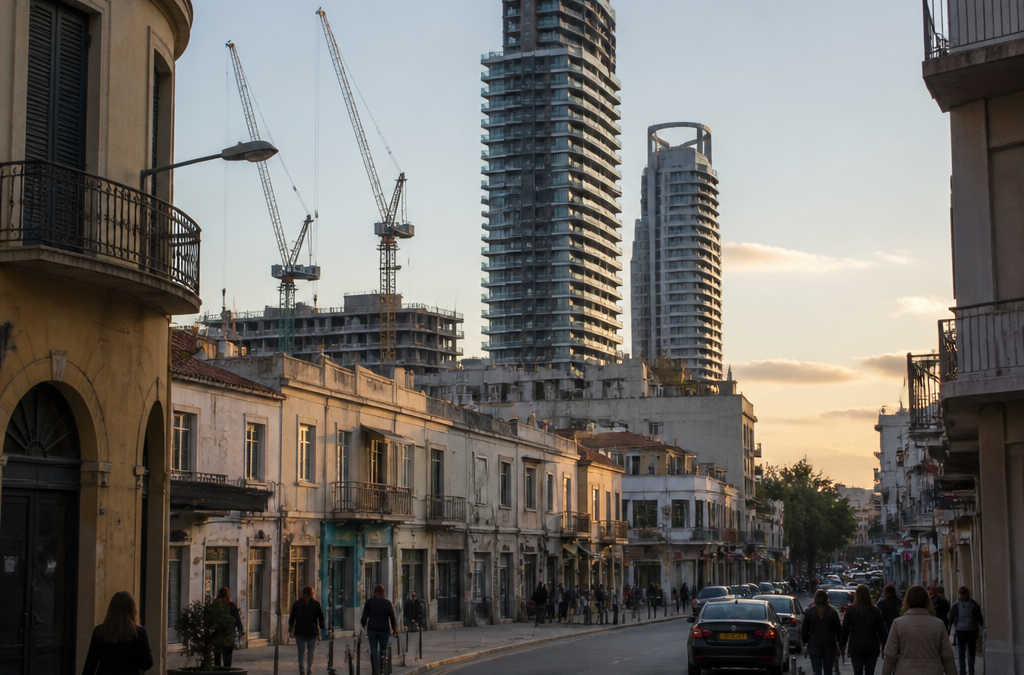
Limassol’s skyline is changing quickly. New towers, offices, a bigger marina, international companies and a growing technology scene have made the city one of the most visible business centres in Cyprus. But for people looking for work, the more important question is what happens at street level: can the city’s jobs growth still support a practical, affordable daily life? The salary on offer is only part of the calculation. The commute, housing costs, transport options and time left at the end of a working day all determine whether a role in Limassol is genuinely sustainable.
KEY TAKEAWAYS
- Limassol’s strongest career-track opportunities remain in finance, technology and regulated services — but the rising cost of living means a competitive salary must be weighed against rent, transport and daily expenses.
- Housing costs are the single biggest variable affecting the real value of a Limassol salary — professionals relocating from lower-cost markets are often surprised by how much accommodation and utilities consume of a package that looked strong on paper.
- Limassol’s traffic and transport gaps turn geographic distance into a daily employment problem — commuting time and costs reduce the effective value of a role significantly for workers who cannot live close to the city centre.
- The city’s planned green corridors, bus lanes, cycleways and park-and-ride infrastructure could expand the practical job-search radius for residents without cars — benefiting both workers and employers.
- A €31 million welfare reform is simultaneously underway — read how it may affect working families’ access to support in Limassol.
Growth Has Created a Concentrated — and Unequal — Jobs Market
The city’s economic transformation has been driven by port activity, shipping, investment firms, fintech, technology companies, professional services, tourism and property development. This has created a more international workforce and increased demand for offices, support services, schools, restaurants and co-working spaces.
It has also made Limassol’s employment market more specialised. The strongest career-track opportunities are linked to regulated financial services, compliance, risk, operations and software development. That is good news for candidates with the right skills. It is harder for people whose experience does not match the sectors driving the expansion — and the result is a two-speed market: strong demand for specialists alongside pressure on lower-paid service workers who face the same housing and transport costs.
The Salary Question Is Also a Housing Question
Rising salaries in finance, technology and international services can make Limassol attractive on paper. But the headline figure does not tell the whole story if rent takes a growing share of monthly income. Professionals in accounting and finance or legal and corporate services may find that an offer which looks competitive against their previous market becomes less impressive once accommodation, utilities and commuting costs are factored in.
Workers who cannot afford to live close to the centre move further out, adding time and transport costs to every working day. This creates a practical test for employers too — recruitment packages that focus only on gross salary may not be enough to attract or retain people in a city where housing is expensive. Flexible working, transport allowances, relocation support and genuinely hybrid roles have become meaningful parts of an employment offer.
Traffic Turns Distance Into a Workplace Problem
Limassol’s traffic and roadworks are often discussed as an inconvenience for drivers. For the jobs market, they are also a productivity and retention issue. A role that requires a long daily commute can become less attractive even when the salary is higher. Delays make it harder for parents to manage school pick-ups, reduce the appeal of evening training, and place additional pressure on workers who already have long shifts.
For businesses, difficult access can narrow the pool of candidates willing to accept an on-site position — particularly for roles in maritime and shipping, construction and engineering or the port area, where remote working is not typically an option. Better movement around Limassol is not just a quality-of-life issue; it is an employment-market issue.
Why Public Space and Green Corridors Matter to Workers
Plans for more trees, parks, safer pedestrian routes, lower-speed zones and cooler streets may sound separate from recruitment. They are not. Employees spend part of their lives around their workplace. A shaded route, a usable public square or a nearby park affects how people spend breaks, whether they can walk between meetings and how attractive a district feels after work.
For international companies deciding where to locate or expand, a city’s liveability is part of its talent strategy. Businesses can offer a role anywhere; they compete for people by offering a place where those people can build a life. The same thinking applies to real estate and property professionals who increasingly factor urban quality into both investment advice and personal location decisions.
The City Beneath Still Supports the Jobs Economy
Limassol’s older neighbourhoods, independent shops, cafés, schools, restaurants and everyday services are not simply a backdrop to the new development — they support the people who work in it. Healthcare workers, municipal and public sector staff, hospitality teams and the people who keep everyday services running are as much part of the city’s employment fabric as the compliance officers in glass offices above the seafront.
If the city becomes too expensive for the people who staff its restaurants, maintain its offices, provide care and run small businesses, the jobs economy eventually becomes less resilient. A thriving professional district requires a functioning residential city around it.
What Job Seekers Moving to Limassol Should Calculate
If you are considering a move to Limassol, look at the complete employment picture before accepting an offer:
- Calculate the real monthly value. Compare take-home pay with rent, utilities, parking, fuel or public transport and relocation costs — not just gross salary.
- Ask where the job is based. A city-centre office, an industrial area and a location outside the urban zone create very different daily routines — especially without a car.
- Clarify the working pattern. Hybrid work, staggered hours or a transport allowance can materially change the value of a role. Ask specifically, not just whether it is possible in principle.
- Check whether the employer supports relocation. Assistance with temporary accommodation, registration paperwork or settling-in costs can make a move more realistic.
- Invest in skills linked to the local economy. Compliance, AML, risk, operations, software, data, languages and customer experience are the most reliable pathways into Limassol’s international sectors. The University of Limassol offers executive education in several of these areas for working professionals.
Limassol’s Next Employment Challenge
Limassol has already proved it can attract investment, companies and international attention. Its next challenge is to make that success work for ordinary working life — and for the workers who make the city function. The answer will not come only from the private sector. Public investment in transport, green infrastructure, welfare services and affordable housing will shape whether the city’s labour market remains accessible to the people it needs, not just the people it can afford to attract from abroad.
For job seekers, the message is clear: Limassol still offers real opportunities, particularly in finance, technology, shipping, professional services and international business. But the best career decision is not simply to ask what a role pays. Ask what kind of life the role makes possible.
Analysis based on Cyprus Mail reporting on Limassol’s urban transformation and Jobs Limassol labour market data, 2026.